Copenhagen – A climate resilient city

Climate change is a topic that affects the whole world. Even though it is a long term change, we still need to adapt before it’s too late.

Climate change causes a rise in average temperature, but it also causes more extreme weather events. This means that the intensity of droughts and hurricanes will increase. The world is currently not capable of coping with these changes. The world hasn’t been designed to endure. It is time for us to adapt to climate change and become resilient. Resilience is about coping with changes in the long term. It’s about finding solutions that are beneficial not only now, but also in the future. 

Climate resilience should start in cities. Cities are the concentration of people, resources and infrastructure. Copenhagen is a great example of a city that’s dealing with sustainability and climate resilience. The city has implemented multiple initiatives that deal with climate adaptation. An example of a climate resilient initiative that Copenhagen has implemented is a climate resilient street. Climate change entails that the precipitation patterns will also change. It is projected that certain areas will experience an increase in heavy rainfall. The climate resilient street in Copenhagen copes with the risks of heavy rainfall. Heavy rainfall can cause flooding, which then can cause damage and dangerous situations. The sewage system in the city is not designed to deal with such extreme rainfall. Therefore, in stead of replacing the whole sewage system by a bigger one, the city implemented a resilient solution. The street surface has been replaced by tiles which allow water to seep through into the ground. The tiles have been designed to let through a maximum amount of water without losing their carrying capacity. Beneath the tiles there is a reservoir which can retain the water in case of extreme rainfall. The water is able to flow between four chambers which can be connected to the sewage system. In case of drought or a frozen surface which doesn’t allow water to infiltrate, this reservoir offers a resilient solution. This climate resilient street provides a great example of an initiative that can also be implemented in other cities. 

Copenhagen has lots of climate resilient initiatives, like the street, that have been implemented. However, the city has taken it a step further. Copenhagen is working on creating an entire neighbourhood that is climate resilient. The vision for this neighbourhood has green streets, urban squares, and streets that diverse rainwater away from the neighbourhood. The neighbourhood focusses on solutions which are cheaper, easier, and more flexible than conventional solutions, whilst creating a better living environment for the residents.

Other cities should take an example from the implemented projects in Copenhagen. Even though climate change is happening slowly, we need to be prepared in the long term. By becoming resilient now, cities can cope with weather risks and become a safer environment to live in.

The vision for a climate resilient neighbourhood

Would you like to go to your work with a boat?

A blog with a view towards the water management of The Netherlands

The output of Europe 

Did you know the name ‘The Netherlands’ literally means ‘low land’? A big part of The Netherlands is under sea level and is due to this very vulnerable to flooding while it is one of the most populated areas in the world. Since The Netherlands exist and long before that (about 500 B.C.) there has been an intensive flood control. The Netherlands is often called the output of Europe thanks to two big rivers ending here into sea; the Rhine and the Maas. Because of this a big part of The Netherlands is actually a big delta, a place where rivers enter the sea. Sediments like sand and clay which are carried out by the rivers are accumulating in a delta. So in The Netherlands we live on sand and clay that is carried out by two rivers, funny to realise right?

Picture of The Netherlands from the side, North is on the left. You can see the enormous rivers ending                                                        here into sea. 

A chained coastline in a dynamic area, sustainable?

In the past there have been several devastating floods in The Netherlands and to defend this the coastline is surrounded by unnatural dikes and partly by dunes – which are also a good flood defence. Here you can see a short movie about all the flood defence we are doing in The Netherlands. 

 In my opinion we as humans are doing an almost impossible job here in The Netherlands: we are trying to hold on to a certain form of a delta while a delta is super dynamic. Twenty-three boards in The Netherlands are responsible for the flood defence and they do their very best to keep the dikes intact and high enough. Dikes are getting higher and higher as you can also see in the short video, but is this sustainable on the long term? 
As an Earth sciences student I am wondering how the Netherlands would look like without all the flood defences, without human influences in this dynamic area, thus without the water boards. As the sea level will rise in the future it is getting very difficult to keep saving The Netherlands from floods. Maybe we should think about other options, like giving land back to nature. 

The Netherlands without human influence 

This picture below is an example of how The Netherlands would look like without flood defences. The system will be very dynamic because of the two incoming rivers and the landscape will change constantly due to the influence of the sea and river input. 

Although it is a nice idea that you can go to the beach in Utrecht, this situation will never happen on purpose. If this scenario without dikes will be reality almost two-third of The Netherlands will be flooded, even Amsterdam, the capital of The Netherlands and the harbour of the city of Rotterdam – which is a huge source of income for The Netherlands. A lot of people live in this area and can hardly move somewhere else since The Netherlands is a very densely populated country. However, we can also think about the idea of giving land back to nature in a positive way, especially when we take the nature into account. Biodiversity in The Netherlands will have a massive boost. The Waddensea in the North of The Netherlands will be expanded towards the West. It is not a realistic idea but it is good to have an idea how we have influenced the form of the delta and its ecology. 

New options needed

In my opinion the key to a sustainable future for the water management in The Netherlands is different way of thinking, not only think in raising dikes. Although it will be very difficult to tame this delta, giving the land back to the sea is not an option in my option because we already live here for too long with too many people. We need new options, maybe go back to building on mounds like they did 1000 years ago or maybe even find ways for building on water. The delta will never really be tamed so we have to find new measurements before we have to go to our work with a boat. 

1,2,3 Geveltuinen

I will let you in on a secret. Underneath the tiles in front of your house lies a whole other world. I am talking about a wonderland that waits to bring joy to your life. You don’t believe me? Then let me fill you in on a hobby, your Neighbors will adore you for! More importantly, I want to inform you about a relatively easy gain in life quality that might be just the right thing for you.

If you live in a metro area, chances are likely that you do not always have access to a garden for recreation. If you, like me, still value the occasional refuge into nature every now and then, you will also resort to the parks and nature reserves scattered around the city. But who said that nature and city will always exclude each other? The truth is: They don’t! Biologists agree, that Cities, despite the common association of being distant from nature, are home to a wide range of species to both plants and animals, which thrive exceptionally well in this relatively new habitat. Further, that there is a lot to gain by greening the city.

So why should we include nature within the city? Let me fill you in on some ecology 101, and you are in luck, because it doesn’t get any shorter than this. Many reasons for greening are accounted for in the concept of, what scientists describe as, ecosystem services. Researchers strongly advocate for the benefits that we are provided with by nature. Nature provides us with resources (“urban farming”), regulates our surroundings (“micro climate”, “disease control”) and brings cultural value by improving our well-being (“recreation”). Importantly, In order to obtain and benefit from nature around us, the health of our ecosystem is of vital importance. A healthy ecosystem depends on the amount of diversity (“biodiversity”) and more precisely, the amount of different species. Since this species diversity increases with the size of the ecosystem, what we really need is a large and well-connected ecosystem!
This has also been acknowledged by the municipality, that emphasizes the importance of ecological corridors, which connect larger green spaces throughout the city. Unfortunately, these ecological corridors are in very poor condition.

Luckily, there are easy ways in which we can take care of ourselves as well as our ecosystem. Many other communities and cities have already realized, that the inclusion of green is far from a distant dream. Also, the municipality, themselves at times a bit slow when it comes to implementation, welcomes citizens to take matters into their own hands. We need citizen participation! And here comes the secret as promised: The city of Den Haag grants you permission, to stir up the pavement in front of your house and plant your own flower bed (download manual)! Simply remove the tiles closest to the wall of your home, stack some vertically to create a small boundary, remove gravel and fill with soil. Now you can plant herbs for your kitchen or flowers to gift your friends. So Yes! there are many benefits, along the admiration of your neighbors, for you to gain while providing for others. Dig it?

Warning: The Netherlands at risk due to water scarcity

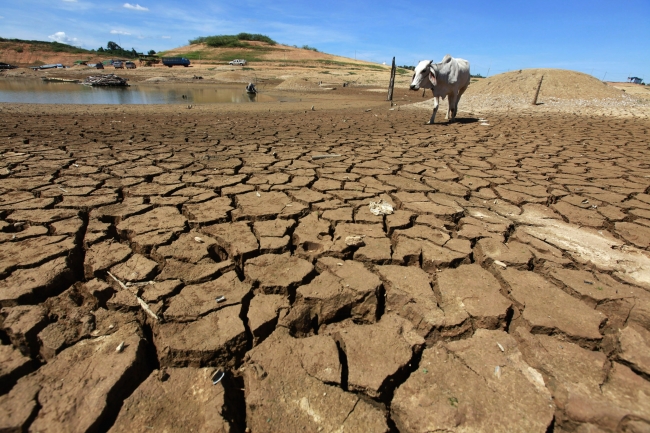
Over the past decades, there has been a pattern of increasingly higher average temperature across the globe.  Continuing our current emissions behaviour, an increase of 1.5 degrees (C) is reached very soon.  An inevitable response of the land ice is enhanced melting. Consequently, sea levels are rising and The Netherlands lays below sea level which makes it a vulnerable area for flooding.  However, the lack of fresh water and periods of droughts poses a more serious problem to The Netherlands.
As a consequence of global warming, water scarcity becomes a worrying phenomenon causing major issues to economy, communities and ecosystems they rely on. [1] Water boards in The Netherlands are nowadays struggling and looking for solutions to manage the fresh water supply during droughts. And we should create awareness among the society for the ‘dry side’ of climate change. How does climate change lead actually to water scarcity and what are detrimental potential consequences?

First of all, it is worth explaining that rising sea levels can cause water shortage. In fact, global warming affects the movement of water into the atmosphere. This leads to severe weather conditions, including powerful rain storms and intense dry periods and heat waves involving huge shortages of precipitation. [2] In addition, a major problem is salinization of rivers due to  salt seawater encroaching up the river as external salinization.[3]  The Netherlands is below mean sea level which makes external pressure  even higher and increases the salinity even more. In this way both the amount and the quality of fresh water could be prone to dangerous decline.

Bearing in mind the previous point, in what ways is the lack of fresh water harmful for us? Competition for water causes a growing risk for many sectors and services.[4] Predominantly, agriculture and horticulture are highly depending on good water quality. Both vegetation is significantly damaged by salinization and habitats are interrupted by installations of sluices or water facilities. Moreover, quays and dikes dry out and collapse due to dehydration of the material, endangering public safety. Besides this, an impact of a drought can be find in industrial companies who are transporting goods or passengers by water. Locked sluices could limit the passage of bigger naval vessels and therefore distribution of products. Companies need alternatives ways of shipping which involves high costs. Also water recreation will be prohibited in certain areas in order to reduce an exchange of fresh and saltwater. On top of that, dryness in soil cause foundations to crack and sink, leading to the need of expensive repairs. [5]

In conclusion, we all have should have a better understanding of the consequences of global warming. Even though the sea levels are rising significantly, the lack of fresh water poses major problems to both public health and safety and also industrial and agricultural activities. Periods of droughts become more frequent and more severe and we should be aware of the importance of sustainable water use.

Referring to www.ec.europa.eu/environment/pubs/pdf/factsheets/water_scarcity.pdf , The European Commission provides a list of possible improvements you can make individually. Now, let’s have a look how to save the water supply!


Destruction of quays in Wilnis due to dry soil

[1] http://ec.europa.eu/environment/pubs/pdf/factsheets/water_scarcity.pdf, August 2010, page 1 European Commission

[2] http://www.climatehotmap.org/global-warming-effects/drought.html, page 1

[3] Hhtp://deltacommissaris.nl

[4] https://drought.unl.edu/Education/DroughtforKids/DroughtEffects.aspx

[5] Presentation at Rijnland building: KWA,by René van der Zwan from Hoogheemraadschap Rijnland, 14th of December

Leiden: the city of the future

The city of Leiden, like every urban area, is currently facing big challenges. Due to the increasing global population, cities have to provide more and more living space and facilities while at the same time it is necessary to limit the growth of the impact on the environment this will entail. Thus, there is clearly a need for cities to implement new approaches, solutions and strategies in order to create a sustainable and resilient place to live in.

One of those approaches is using the concept of a circular economy, which is defined as following by the Ellen MacArthur Foundation: “The circular economy refers to an industrial system that is restorative or regenerative by intention and design. It replaces the ‘end-of-life’ concept with restoration, shifts towards the use of renewable energy, eliminates the use of toxic chemicals, which impair reuse, and aims for the elimination of waste through the superior design of materials, products, systems, and, within this, business models”. This concept is used as a starting point by both companies and governments to shift towards a system that is both sustainable and economically viable.

By introducing implementations that fit this concept and setting up sustainable initiatives that together will transform the economic system, Leiden has the potential to act as a sustainable and innovative leader in the Netherlands and could set an example for the rest of the country as the city of the future. With new prospects and financial incentives for cities and companies within those cities to implement sustainable and circular policies, sustainability and circularity will be promoted as an opportunity, not a threat.

Leiden already has taken some serious steps and set some ambitious goals in order to become a circular city, but in order to realize this and really make sure Leiden will become the city of the future, communicating this to the rest of the country / world is crucial.

This is where the importance of city branding comes in. City branding refers to the use of marketing techniques within a city to create an unique identity. Through city branding, Leiden can create this unique identity and brand itself as an innovative and sustainable city. This sustainable image can have multiple benefits for the city. Next to the improved status of the city as a progressive and ambitious city, it will also lead to economic growth because city branding is often used by cities to distinguish itself from others, so that the city becomes more attractive for (new) residents, visitors, companies and investors which will lead to economic gain. Also, branding Leiden as the city of the future will. By promoting it as a sustainable and innovative city, it will attract entrepreneurs, investors and other enthusiastic people which will lead to new ideas and will eventually make the city even more innovative and sustainable.

A strategy that is often used by cities to brand and promote itself is hosting big events, since this draws a lot of attention to the city and provides the opportunity to present itself in a positive way. Another strategy is the use of slogans,like I Amsterdam or Your-Singapore. The use of a slogan can convey a message which can be used to position themselves in a desired way. This emphasizes the uniqueness of the city and also provides a framework through which people can perceive the place, as defined by K. Dinnie (2010) who researched the link between city branding and societal changes. City branding is focused on emphasizing and presenting the positive aspects of a city, which are consciously selected by the marketeers. This means that certain, less positive or even negative, aspects are ignored and not taken into account when creating the city brand. Despite this selective construction of a city brand, the brand is also the identity statement the city (Dinnie, 2010). The brand is a summary that, next to the desired image, also captures the truthful story and uniqueness of the place.

Leiden could use both the desired and truthful image of the city to brand itself. Since Leiden is a city with a lot of history, they could use this as a strength and position themselves as a historical city that is focused on the future. Thus, together with both technical innovations and the use of city branding (through strategies like hosting events or using a slogan), Leiden has the potential to become the city of the future.

Julia de Roo

Minor Sustainable Development

Blogpost Area Study

15-01-2019

Sources:
Dinnie, K. (2010). City branding: Theory and cases. Springer.

In a drought you got to help out, save water without a doubt!

Last summer, there was hardly any rain from the beginning of June to end of September and this caused a drought that was even worse than the drought in 2003. A drought occurs when this caused a drought that was even worse than the drought in 2003. A drought occurs when there is little to none precipitation coupled with high levels of evaporation and there being a high water demand. When a combination of these factors causes the water level to drop to 150 mm in the Rijnland area there is a drought. In the Netherlands we see water out of the tap as one of  the most ordinary things in our life’s, but this is going to change. Municipalities and water boards have an important role in the prevention of flooding and drought, but can’t do this alone. Companies like Rijnland and Dunea will do everything to provide everyone with water and at the same time to safe everyone from flooding. But we, as citizens, should start thinking as well and maybe change our lifestyle. This because fifty to seventy percent of the surface in cities is in fact private land.

First, there are different ways to prevent yourself against flooding. More green in the garden ensures that rainwater can drain away easier. With a fully paved garden, it can stay on the tiles for a long time. Second, store rainwater in a barrel and do not let it run into the sewer directly. You can use the water in the garden, for example. Furthermore take green roofs, a green roof is a roof that is covered with plants. A green roof can absorb about 50 percent of the rainwater and release it into the atmosphere. After all, let your rooftop water enter an infiltration facility underground wherefore it gradually sinks into the ground.

 The other side is how to save water? The average Dutch person consumes a small 120 liters of clean drinking water day. Most of this is used during showering or using the bath. The toilet and the washing machine follow in a good third and fourth place. The easiest solutions is to shower less long and choose the shower above the bath, this not only saves you water but also money. The second one is to use rainwater for flushing your toilet and maybe even for your shower. Another option is to install a heat exchanger to re-use rest heat from the waste water. Furthermore invest in energy and water-efficient equipment, such as a high-efficiency water heater or A-labeled dishwasher.

 There are so many small and easy solutions, but why don’t we take action? For decades now we have wasted and mismanaged the world’s water supplies. Today, 27 countries are short of water, a quarter of the world’s population has no safe water, 46 percent have no proper sanitation and each year four million children die of water-borne diseases. As most of the world’s major river systems cross several national boundaries, the scope disputes and the threat to international security is becoming more and more real. Therefore maybe you should ask yourself the question if you already do enough to save water or could you do more, because even you can make a change!

Laying the framework for a sustainable society

It has become increasingly important in the current society to make people aware of the impact each individual can make.
In this post I will be addressing how someone can work towards not just raising awareness, but also making progress towards a more sustainable way of living. There are many issues which can not be addressed by simply making people aware of them since there is a big gap between being aware something and being able to change it. Although not everyone has in-depth knowledge about large scale issues nowadays because these issues became harder to define, those with the knowledge can lay the framework.

The most efficient way to tackle these issues is by providing information that helps initiate change towards sustainability, but more importantly, on how these changes can be supported.
If the framework is not laid properly, the entire structure built upon it will be unstable. In the current society many people are focused on being different (but therefor becoming the same) rather than making an actual difference. This can be linked back to the more prevalent capitalistic framework that regards most people as ‘consumers’ which presents ‘new’ products as different and better(yet the same) compared to existing products. However this framework is not stable, since to make profits from new products the old must first be discarded. A clear example of this would be the iPhone.
This framework revolves around profit, and not on sustainability and resilience. However, the main problem with the mentality that came with this framework is that people became more desensitized and an artificial craving for ‘new’ products was created. What makes this mentality dangerous is that the same reasoning started being applied to every day life, the same people that focus on ‘trends’ are the first to start taking pictures during accidents rather than helping. The other side of this problem is that if the trend shifts to ‘doing good’ everyone might suddenly try to help without the knowledge to do so. Most people would agree that president Trump is a good example of the negative impact an amateur with power can have.


The framework that is required to improve society is focused on sustainability and resilience. This involves making people aware of how systems can be made self-sustaining, for example circular waste management can be explained by a simplified demonstration of input-output such as in a flow diagram.
What people really need to be made aware of is their own impact on things, how small changes matter on a larger scale. People need to think more about long term than short term plans that benefit more than just themselves. A single seed is easily planted, but if nurtured properly it can become a large tree.


Current society looks more like a machine than a tree, with the scientific, public, economic, and political sector working like cogs you can understand how it works by looking at the interaction between them. The scientific community focuses on observing and analyzing changes while the media finds a way to present it to the general public without causing a panic. Meanwhile the economic (business) and political sectors try to implement changes that benefit the general public while keeping it stabilized. Although very simplified this example illustrates that the overall capacity to deal with change on a large scale decreases when one or more of these sectors do not function properly. Innovation occurs when important changes happen while society functions at high capacity.
However in a sustainable and resilient society each sector can be seen as a branch of a tree rather than a cog in a machine. If a problem occurs on one branch this does not affect the others, although the effect is covered by the entire treetop and recovery happens on its own overtime. In a machine however if one cog is damaged this affects the entire machine drastically and can cause it to break down completely.
If we want to have a sustainable society we should focus on being prepared to act on opportunities to make a difference.

References:
1. D, Jared., (2005). Collapse, how societies choose to fail or survive. New York: Viking Press.

2. Jabareen, Y. (2008) Environ Dev Sustain 10: 179.
https://doi.org/10.1007/s10668-006-9058-z


Public park and community garden: urban green as a bond cohere environment with people

Public park a environment with group memory ���

Pubic park and community garden, as one of the most common public place and urban green infrastructure, provides both culture services and ecological service in cities. However, due to the deterioration of the urban environment, people tend to focus on ecological functions of building parks and public gardens, while often overlook the particular and unique sociological factors of the field. But if urban space wants to stay resilient and long-lasting, human factors and historical factors can’t be separated from geographical and environmental factors. Tadao Ando, a prominent architect ever said, “The most important value of urban culture depends on the fact that as the group memory shared by people, it will go beyond the times based on particular shared memory of a group of local people.” So when designing urban green parks and gardens, it not only need to take into account importance of the natural environment, but also consider about the needs of local residents and the echo with history and culture. Only in this way urban public space can be sustainable and resilient.

As a type of urban green, public park and community garden offer a diversified ecosystem services include provisioning services and regulating and supporting services. Parks and public gardens under a size of 2.5 hectares are included in this category. They are one of the most effective measures to reduce urban effects and increase biodiversity. Planting big trees and bushes in parks and gardens can provide shade, reduce surface heat absorption, increase oxygen supply, and contribute to soil water storage. In the flood and rainy season, they are very helpful for alleviating the flow speed of surface water. In addition, they can offer a living space for a wide variety of organisms, especially for insects and small mammals. Green vegetation can provide them with a good rest, concealment and breeding space.

But after talking about significance of environmentalism and regionalism of public green space, how can we design a good one for Leiden that meets both ecological needs and local characteristics? As a Dutch city with a long history, Leiden has a wealth of human and natural resources. It is a city that must be passed from the Hague (political center of the Netherlands) to Amsterdam (International center of the Netherlands), and it have the oldest university of the Netherlands (Leiden University). In addition, Leiden used to have a prosperous textile industry, and contains developed canal distribution and urban planning, which made business once prosperous. Since before, countless scholars and businessmen have visited here and have been made it as a culture and history centre.

Image result for leiden history

Till today, thousands of students, tourists and different kind of people visit Leiden everyday. So if there is going to build public parks and community gardens in and around the Lorentz building, in which it will become the landmark building right next Leiden Central station, what kind of green space design can be the most suitable to this fascinating city. In order to solve this problem, I think the first step is to understand people’s expectations for the green infrastructure. Do they agree to build such a public space? How’s the green space of Leiden should be look like? And what they want to do in this land? After understanding this, and combine with the history background and geographical conditions, the design of public park and community garden of the Lorentz building must be unique and excellent. After all, the vitality and diverse atmosphere of a city are always cultivated by the residents themselves.

Sowing change for a greener city

By Nina Ruig

The environmental issues we’re struggling with are becoming more prone. Luckily they are also getting more visible. Circularity, urban green and sustainability have become so called buzzwords. Now that everyone is talking about it, it seems time for some action. All over the world initiatives pop up for a better, healthier planet. Ranging from nationwide bans on plastic bags to entire new cities build according to the latest views on sustainability, such as Masdar city.

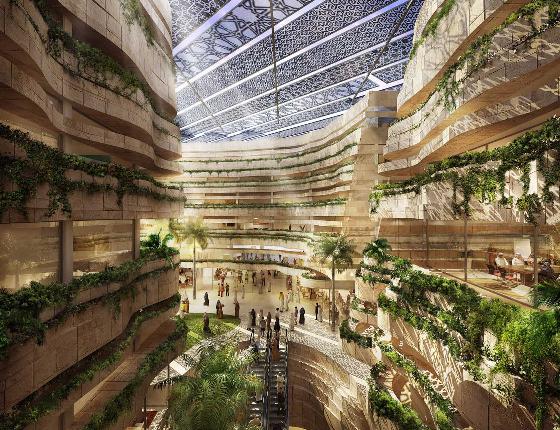
masdar
Impression of Masdar city in the United Arab Emirates

More and more governments are making the environment an important point on their agendas. The Paris agreement of 2015 is a good example of an international treaty to improve the sustainability and the will to mitigate climate change of nations worldwide. This agreement was followed up by the Katowice climate change conference  which resulted in a more detailed rulebook to actually achieve the agreement. However these rules are mere guidelines and none of the countries that signed can be hold accountable.

This is a problem we see on all levels. Here, in the Netherlands the government is falling apart over climate negotiations. Everyone agrees something has to be done and no one wants the responsibility for actually doing so. The same things happen in municipalities: The Hague set some ambitious goals to achieve more sustainability and circularity in the near future. To reach these goals they want to, amongst other things, implement more urban green. This ranges from planting more trees, creating more parks, to implement vertical greening, hanging gardens, green facades and rooftop gardens. These measures will contribute to the decreasing of the heat island effect and run-off, increase of biodiversity and air quality and will contribute to improved physical and mental health and aesthetics. The municipality has a multitude of plans and documents in which it describes its goals for urban greening. However they are never specified, there is no conclusive plan of action. Some ideas are in place, but the city is short of sufficient funding.

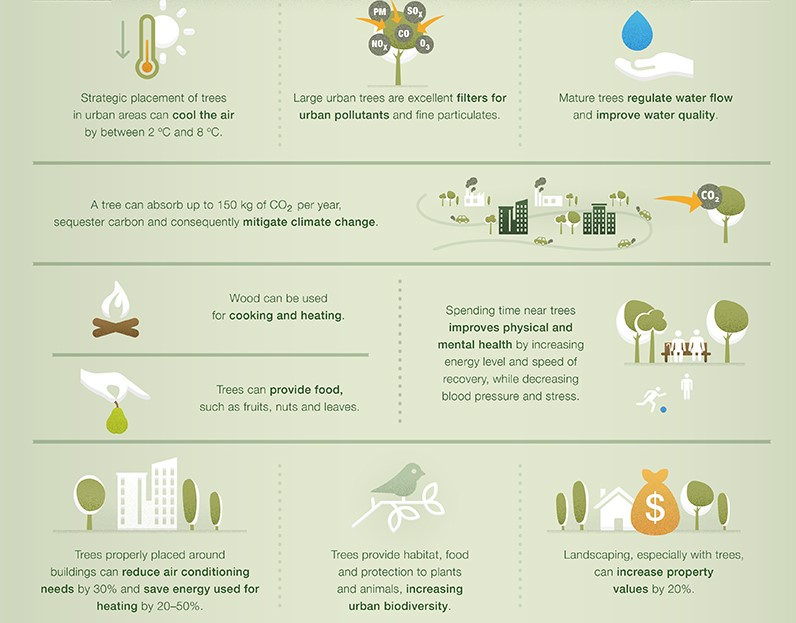
benefits urban green.2.jpg
Benefits of urban green as visualized by the Food and Agriculture Organization of the United Nations

This brings us to the core of the problem. Since the municipality is a political authority, everything they work on turns in to politics. If we want more funding for urban green, it means we have to cut funding somewhere else. Who is going to pay for the urban green? Is that fair? Aren’t there other topics that need our immediate attention? All parties involved have a different take on these matters, which leads to complicated debate and a lot of compromise.

Of course it takes a lot to transition from the existing structures to new, more sustainable and greener ones. However the top down approach doesn’t seem to pay off quickly enough. Are we going to let this stop us from creating a greener living space? Do we have to wait around until the people at the top are finally agreeing? Of course not. We can all contribute in our own way. Plant some flowers next to your front door, put them in front of your window or replace some of the tiles in you garden with some green. You can go guerrilla gardening, build an insect hotel or create a shelter for small mammals, like hedgehogs. Let us make room for grassroot initiatives, while the debate goes on. If we all contribute a little bit, we can change cities to greener environments, reaping all the benefits. Mental and environmental.

For more inspiration on guerilla gardening watch this TEDTalk by Richard Reynolds.

Conflicting interests in a Circular economy.

Koos van Niekerk

I my earlier blog for the Minor-study Sustainability I said that “I am …a self-declared advocate of a liberal economy given its innovation power; at the same time, we should have a strong state to ensure social justice and to solve environmental issues”.  The focus of this earlier blog was on energy issues and climate change and I think that only a strong state can realize the radical change needed for ‘vergroening’ of our society. This is to be achieved by fiscal measures, such as a CO2-tax, and, if necessary, a much stricter regulatory framework to steer production and consumption towards a much more sustainable one.

Waste reduction and waste management in the new high-rise dwellings in The Hague is my current assignment. To this end, we had very inspiring meeting with Ger Kwakkel, ‘Circular Economy’ Programme Manager of the Municipality The Hague. Ger advocates to completely abandon the ‘old method’ of waste disposal for free and of separation of waste as the single performance indicator set by authorities. Instead, we should think in terms of ‘Circular Economy’ where there are closed-loop material flows in an economy and ‘former’ waste is valued as a resource to create new products and services instead.

He gave a nice example of a start-up producing a belt (‘broekriem) made from old bike tubes and being sold at € 30. In such a system production factor prices should include ‘Common ground’ environmental-societal costs, which must be set by a pro-active Government. In such an approach it is up to the market to choose the most efficient production methods, maybe in some cases with government support for ‘green methods’ in an initial development phase. A few couple of days later the PBL-report ‘Circulaire economie in kaart‘ appeared reflecting Ger’s views to such an extent that I checked whether his name was on the authors list.

Well, so far so good: more support for my slogan ‘a liberal economy but with a strong government’. This all works well in a closed economy on a European scale, but what about imports? China, a major trading partner of the EU, is said to apply much lower environmental standards than the EU. To create a so-called ‘level-playing-field’, import levies can solve this issue, something not unusual for the EU which sometimes uses levies on Chinese steel, saying China is dumping steel. Levies might involve some tedious WTO-procedures and even some trade wars, but if we join forces with Uncle Donald of the United States we can manage. But now the ‘Action’ shop: it is selling a belt coming from Bangladesh for a price of € 1,99, whereby the import price is most likely less than € 1. Assuming the Dutch, great bike riders as they are, will be prepared to pay € 30 for the ‘fietsband’, if it means a € 10 premium compared with an ‘Action belt, the latter should be priced at € 19,99, meaning the EU should apply a €16 import levy on the Bangladesh belt. My ‘social justice’ inclination is now saying ‘No’ for a poor country like Bangladesh, no, we cannot do that. Now comes India, an emerging economy, something in-between?

What to do? ….It is not easy

Design a site like this with WordPress.com
Get started